






Solar eclipse and its impact on the psychological state of people
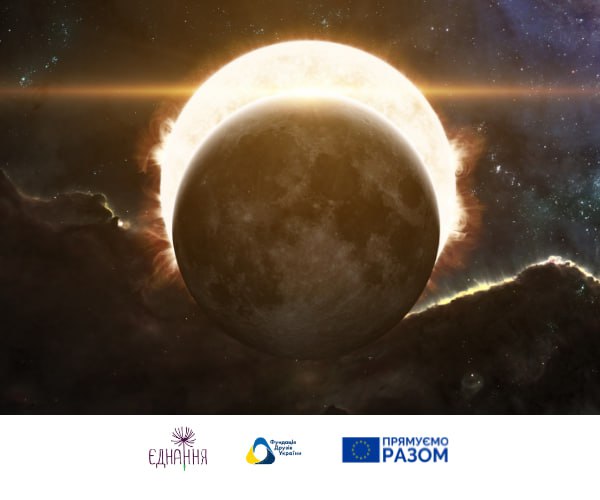
The majestic spectacle that we see in the sky during a solar eclipse always arouses admiration and interest. This is a phenomenon when the Moon or another celestial object blocks the Sun, creating a spectacle that may last only a few minutes but leaves an unforgettable impression. However, in addition to aesthetic pleasure, solar eclipses can affect people’s psychological state. Let’s take a closer look at this phenomenon and its possible consequences.
Solar eclipse: How does it happen?
A solar eclipse is an astronomical phenomenon that occurs when the Sun, Moon, and Earth are in line. During a total solar eclipse, the Moon blocks the Sun’s disk, completely covering its light. In the form of a partial eclipse, the Moon covers only part of the Sun, giving the impression of a horizon or a part of a large solar mug.
The psychological impact of a solar eclipse
Fascination and interest: Watching a solar eclipse makes people feel excited and interested in natural phenomena. This can lead to a sense of oneness with the cosmos and emphasize our small place in this vast universe.
Emotional charge: For many people, watching a solar eclipse is an emotionally charged experience. The moment when the Sun is completely covered by the Moon can evoke a sense of majesty and cosmic peace.
A challenge for self-discovery: A solar eclipse can make people want to reflect on the meaning of life and their own goals. It can be a time for self-discovery and spiritual development.
Phenomenality and perception of time: A completely eclipsed Sun and the short duration of this phenomenon create an impression of extraordinary and depressed time. This can affect the perception of events and remind us of the transience of time.
A sense of place in space: A solar eclipse can remind us of our place in the cosmos. It can influence a sense of deeper connection to the planetary community and responsibility for the Earth.
General conclusion
Solar eclipses are an incredible astronomical phenomenon that evoke a number of psychological reactions in people. They can create excitement, promote self-discovery, change the perception of time, and give us a sense of place in the cosmos. Regardless of how we perceive solar eclipses, it always reminds us of the wonders of nature and the incomparable majesty of the universe.
The publication was published by the Friends of Ukraine Foundation within the framework of the EU Urgent Support for Civil Society project, implemented by ISAR Ednannia with the financial support of the European Union.